
Letting a tutor ship an app without writing one.
Most tutors in India can teach. Almost none can build software. And inside the business, taking one tutor from lead to live was a sequential relay of teams. I designed the do-it-yourself builder that collapses that journey into a flow a tutor finishes alone: pick a template, brand it, load the courses, go live.
The problem
The person with the expertise is not the person with the technical skill.
A tutor's asset is their teaching, their content and their students. Turning that into a branded, payment-ready app is a software project, exactly what they cannot do. So the product absorbs every hard decision, architecture to payments to trust, and hands back a short list of guided choices.
The business felt it too: sales found the tutor, internal teams nurtured the lead over calls, a white-label team built the product. Sequential, dependent, and invisible to the tutor. The brief: hand the whole stack to the tutor, finishable in one sitting.
How I thought about it
Collapse a software project into a guided wizard.
The one thing the old relay never gave the tutor was a sense of progression. So the builder is one stepped flow with a progress meter: each step owns one decision, every choice turns real in a preview of their own app, and the distance to live is always visible.
Self-serve never meant alone. The assisted path stayed, on a hypothesis: a tutor who has already built part of their own site is easier to convert than a cold lead.
Ways in
One funnel
- Phone numberall the flow asks for up front
- One-time codea number, a code, and the tutor is in
- Mobile hands off to desktopcaught on any screen, built on the big one
The build · self-serve on desktop
- Pick a templatesorted by what they teach
- Brand itevery change lands on their own site, live
- Load the coursesthe part only the tutor can do
- Go livetheir domain, or a free one
- Run the businessthe dashboard becomes home base
Alongside, the whole way
The builder, screen by screen
On desktop, six moves from a phone number to a live, branded app.
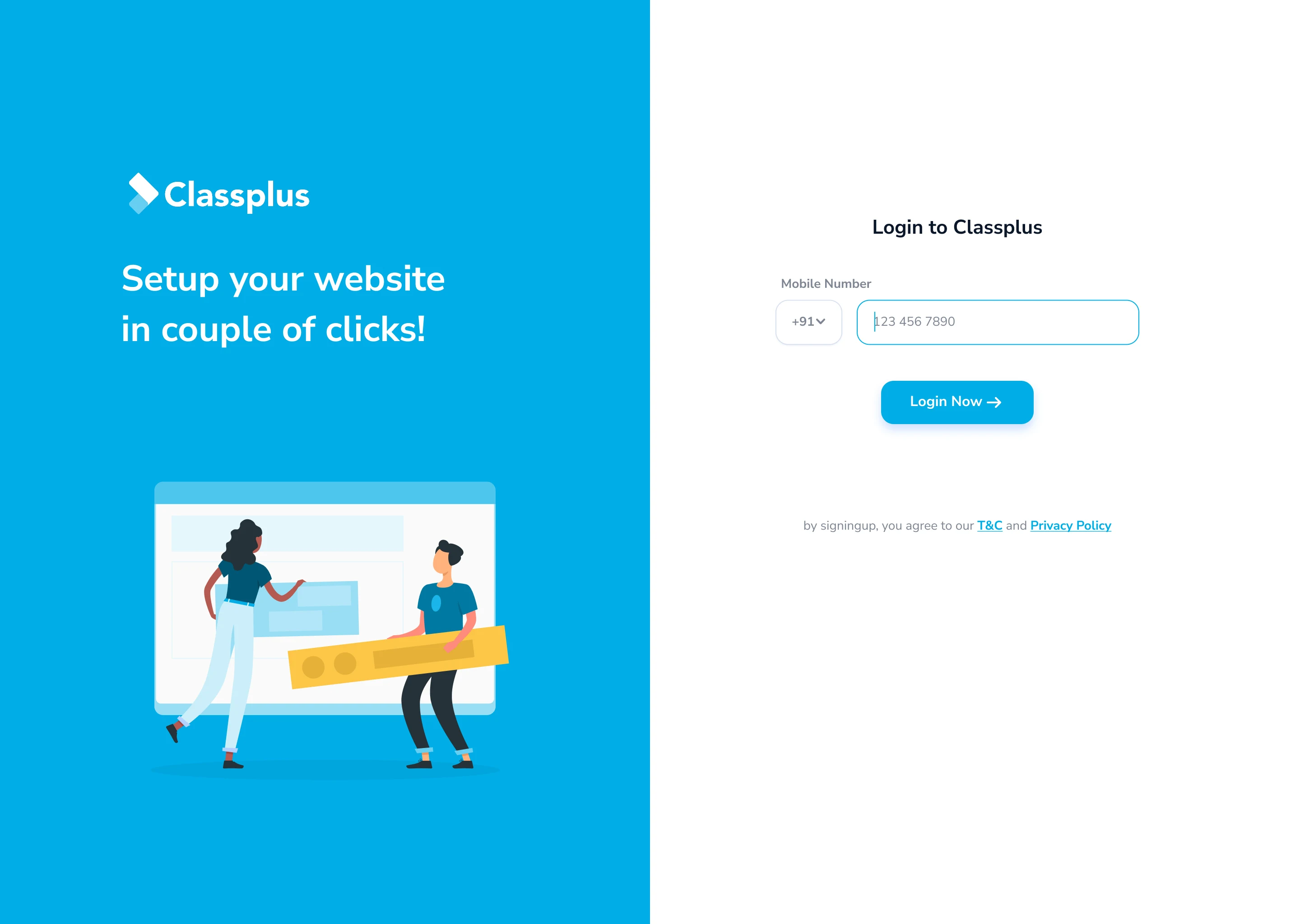
1 · Get in, in a couple of clicks
It opens on a promise: set up your website in a couple of clicks. A number, a code, and the tutor is in. On a phone the builder deliberately stops there: no room for an editor, so mobile captures the lead and hands off to desktop.
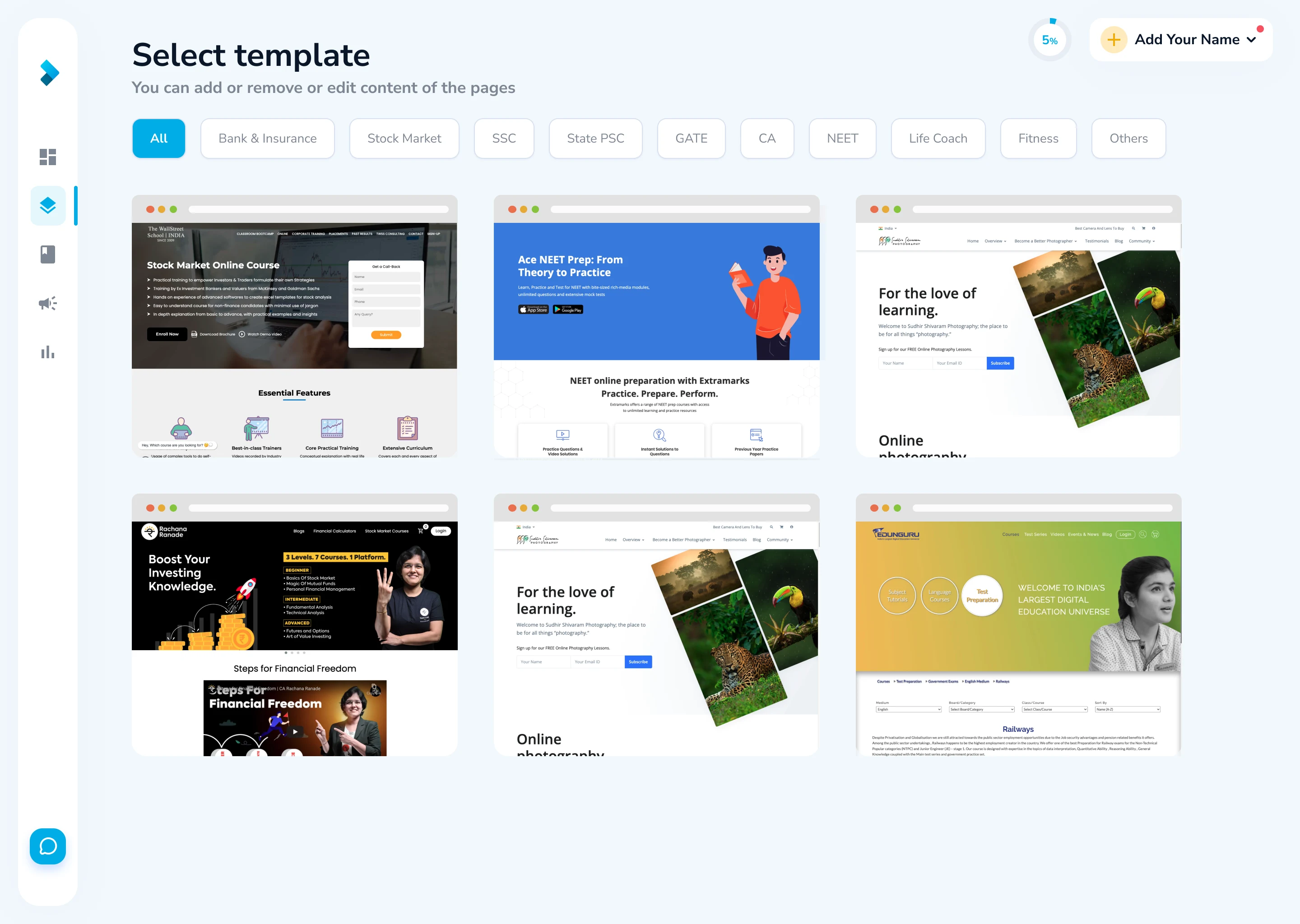
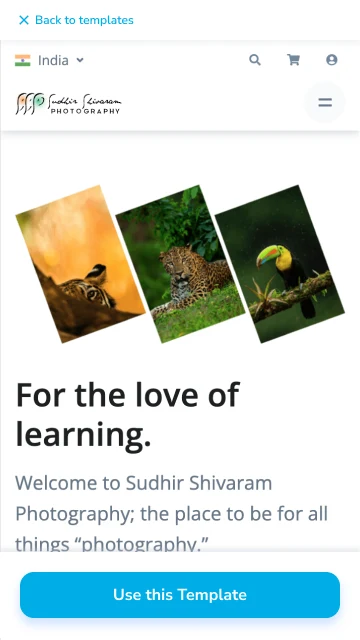
2 · Start from something that already works
Never a blank canvas. Templates sorted by what a tutor teaches, bank exams, NEET, fitness. A starting point, not a design problem.
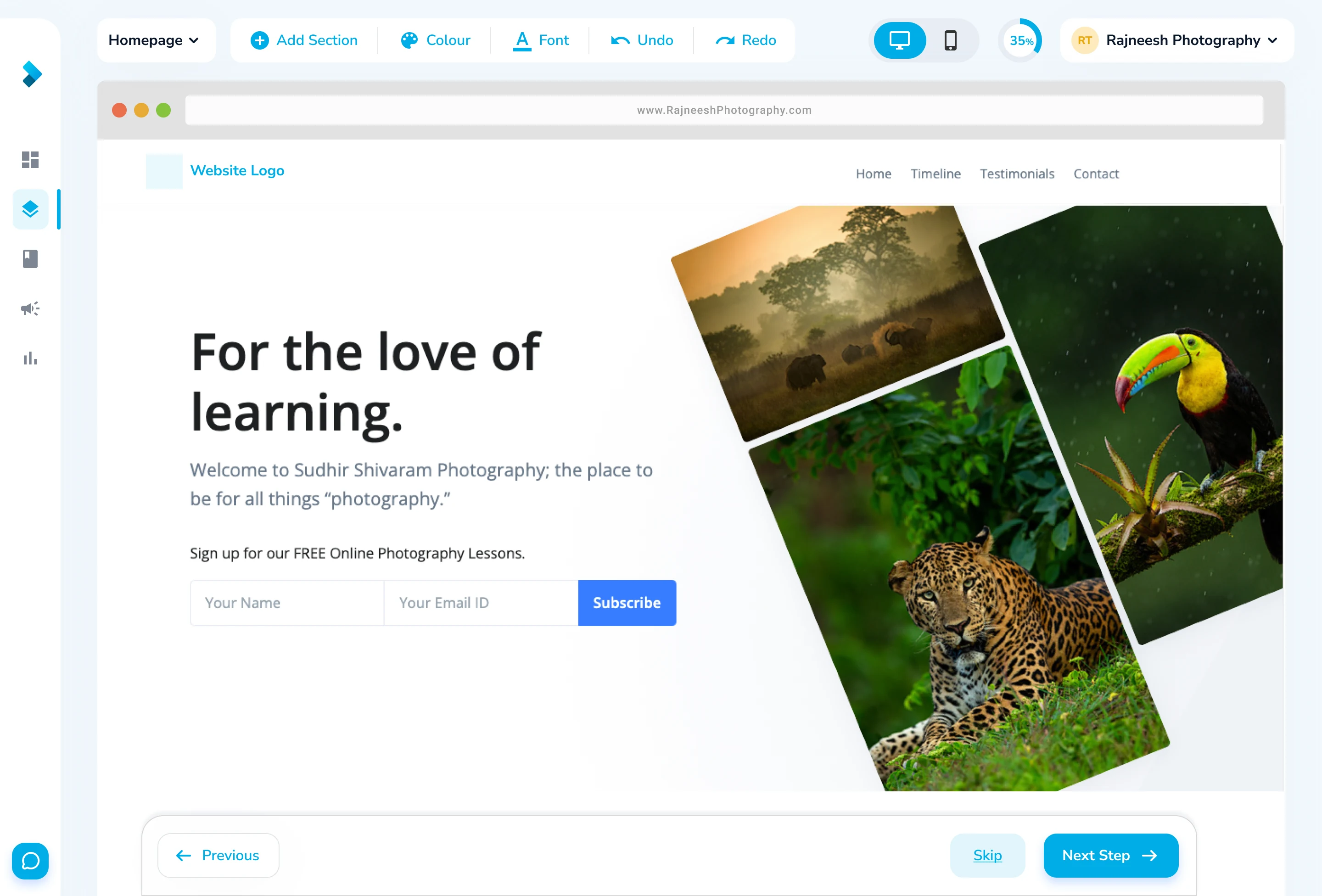
3 · Make it theirs, and watch it happen
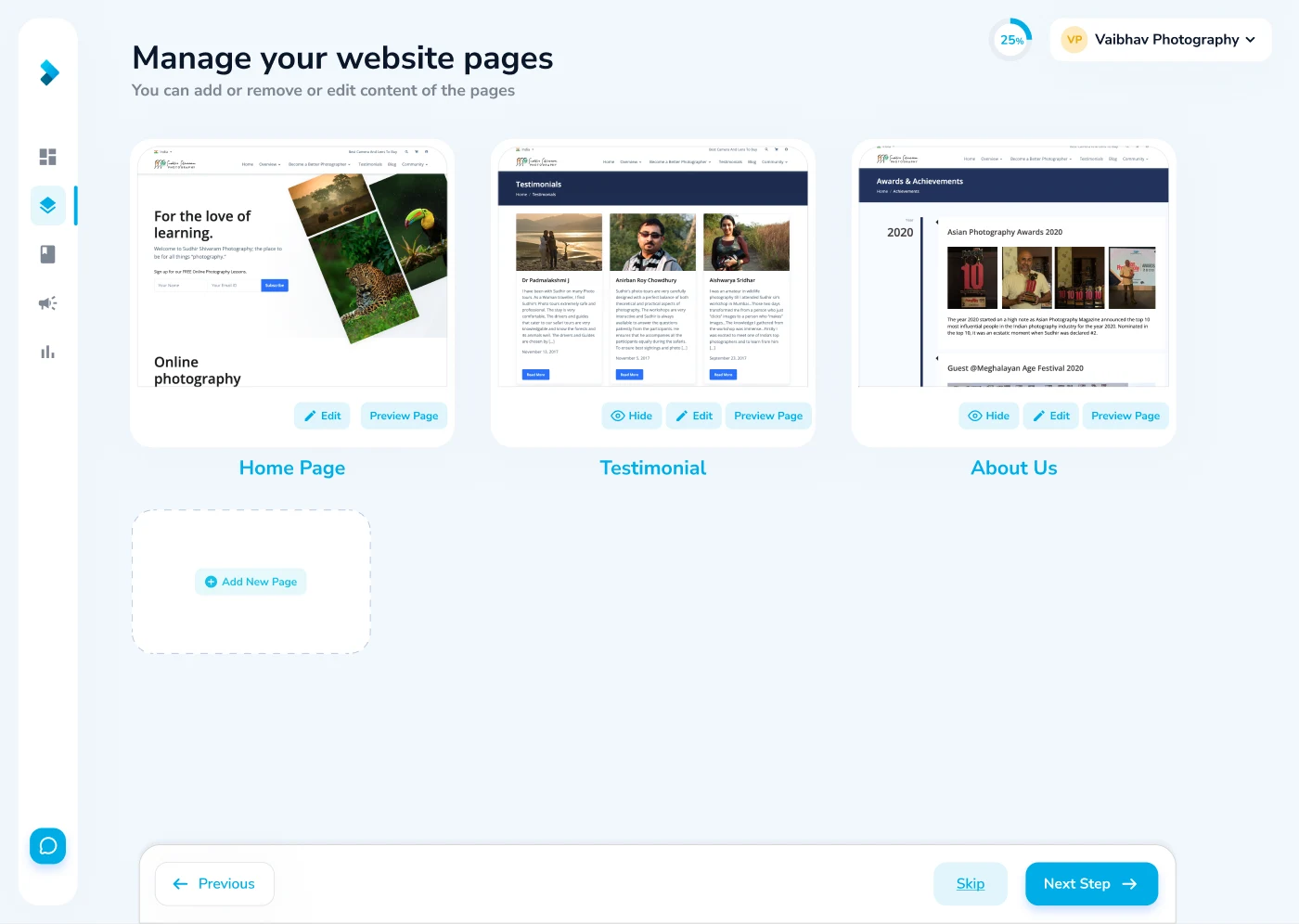
A live editor: every change lands on the tutor's own site as they make it. Branding first, on purpose. Seeing their site exist makes the work worth finishing.
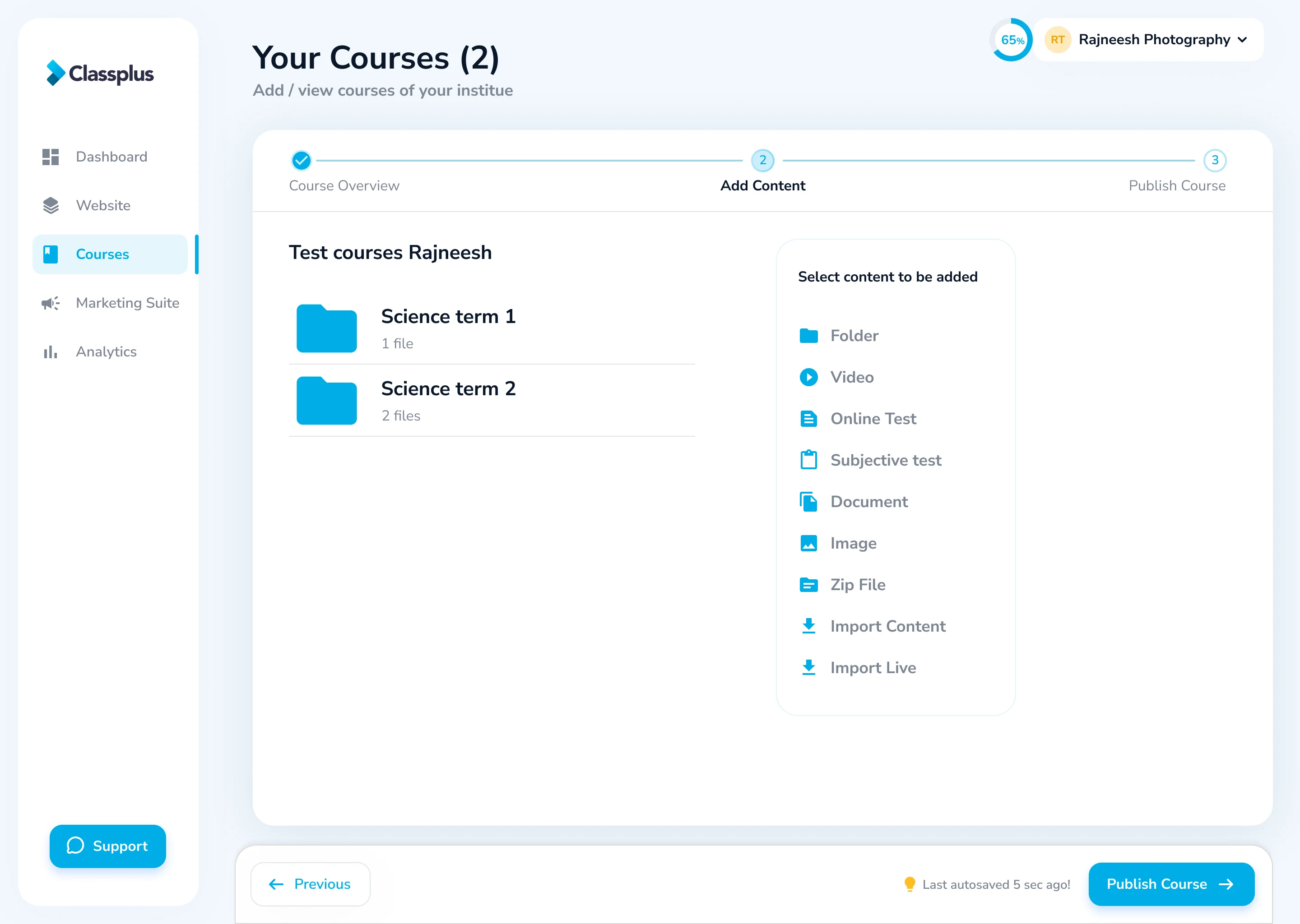
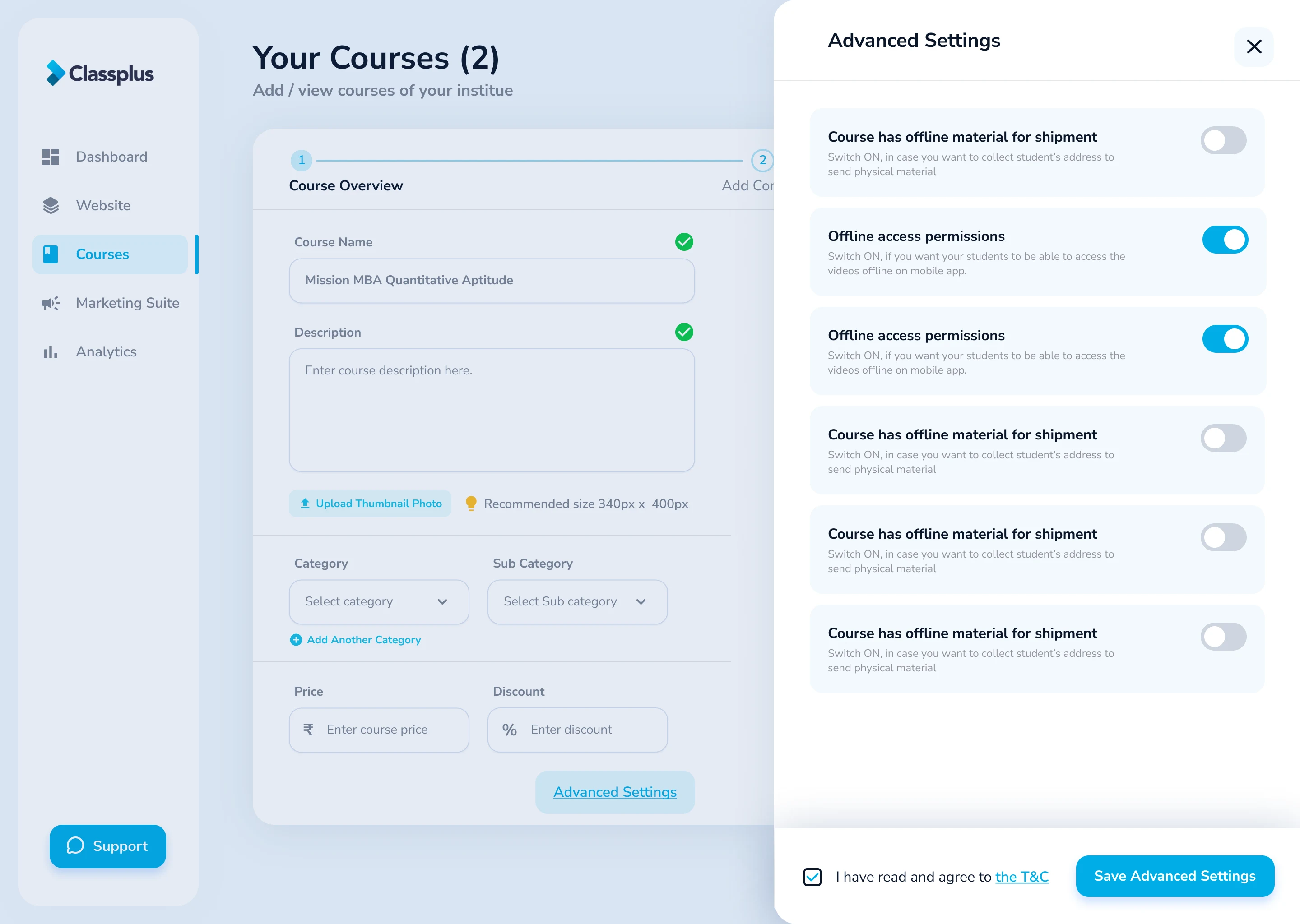
4 · Load the courses
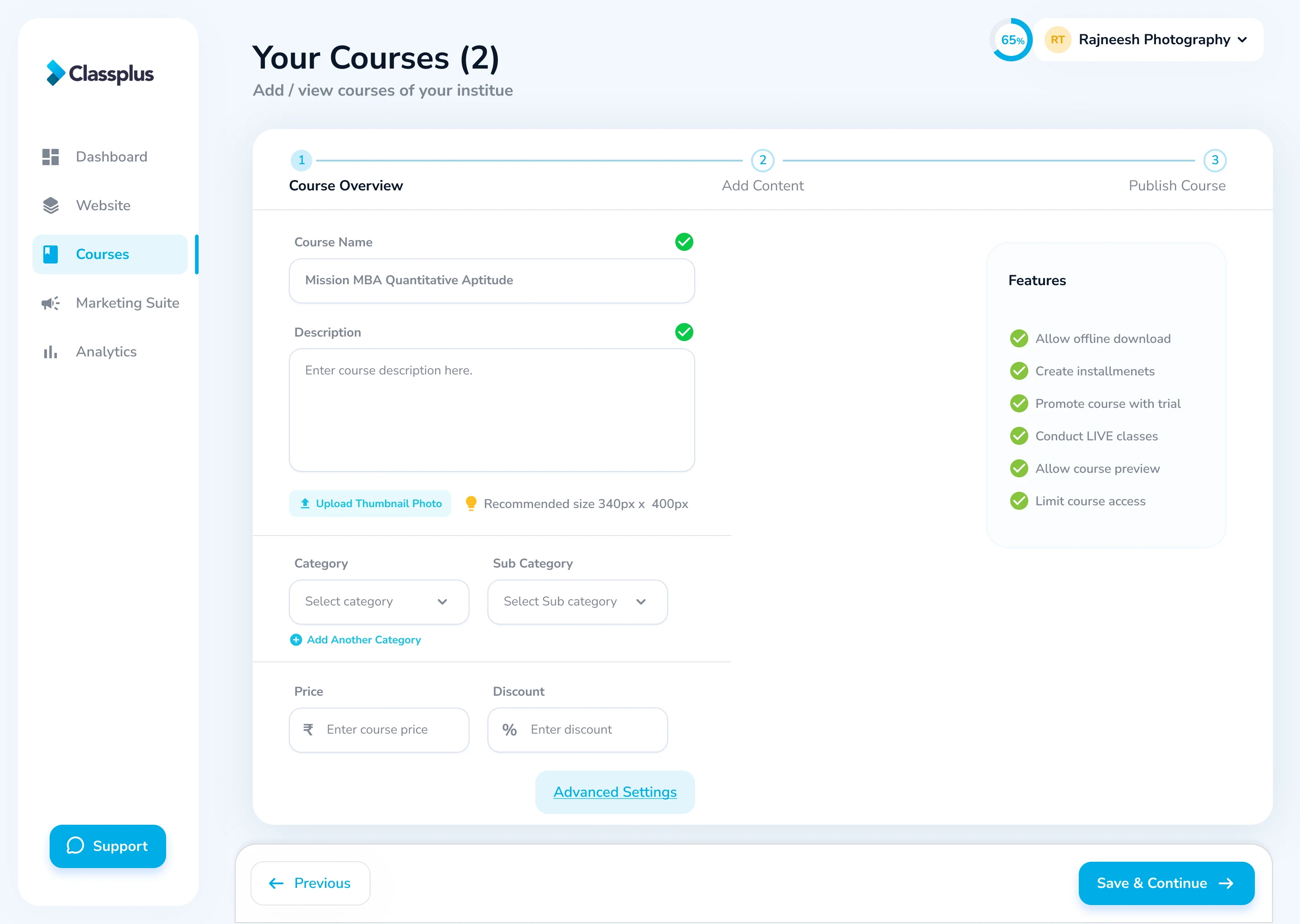
The part only the tutor can do: their courses. A plain form, then videos, tests, documents, live classes, in a structure the platform holds. Pricing and delivery stay underneath.
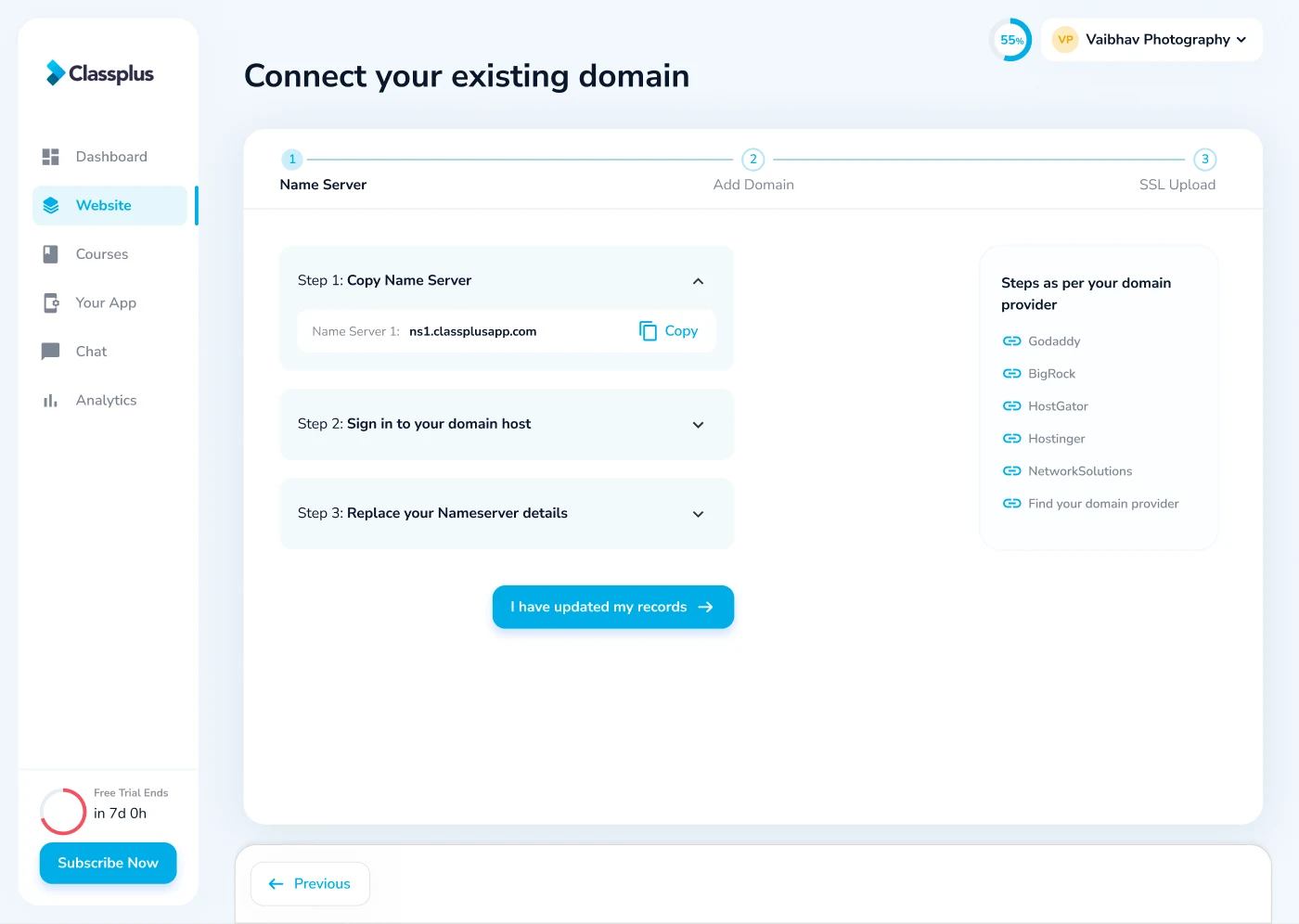
5 · Go live, with no dead end
A domain they own, or a free one. And live is never a full stop: another course, the app, payments.
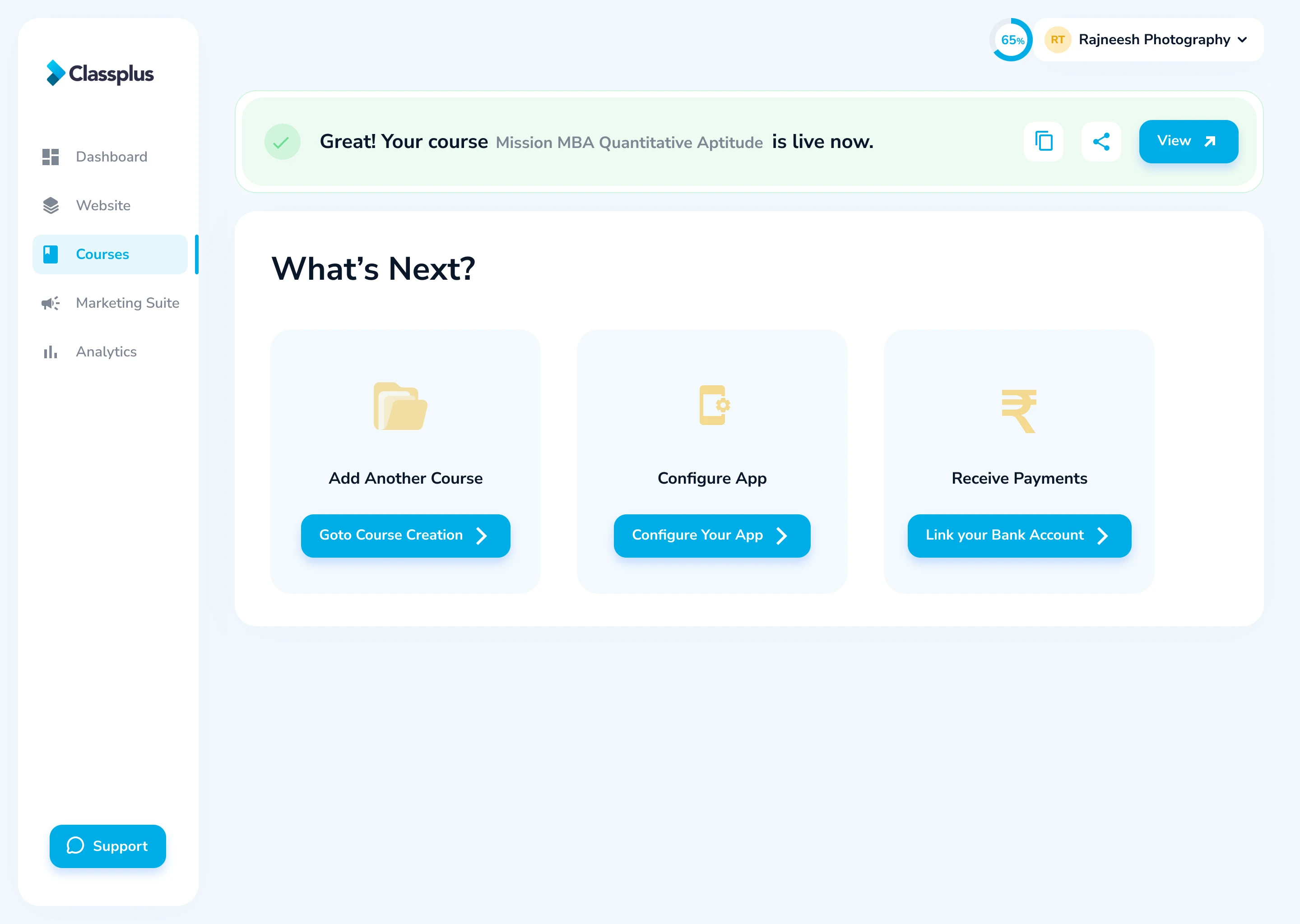
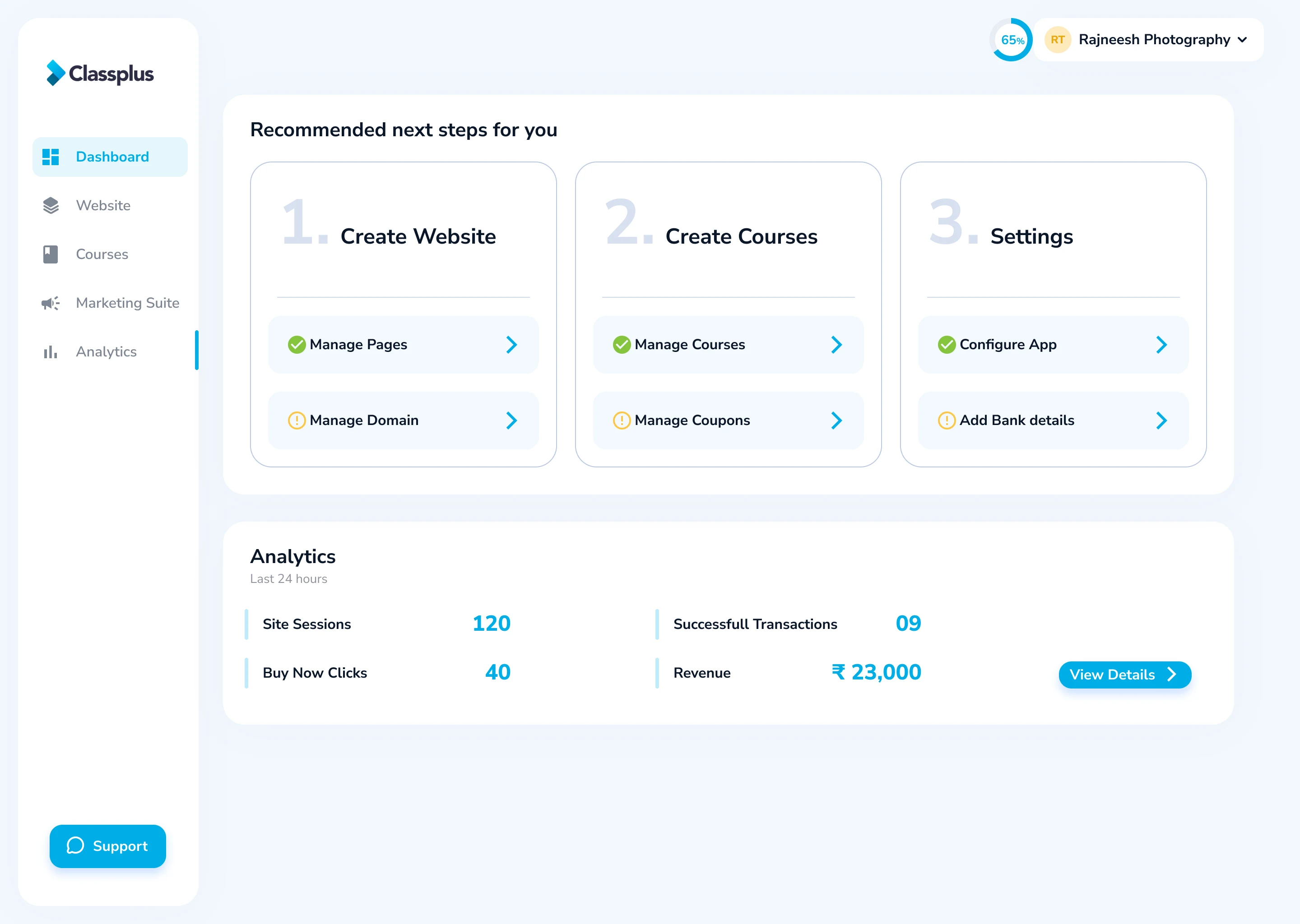
6 · Run the whole business from one place
The same tool becomes where they run it: next step, courses, marketing, the day's numbers. Home base, after launch.
More of the builder
Walk the flow yourself
Both flows, live: the desktop builder and the mobile capture. Click through them the way a tutor would.
Why it mattered
A fifteen-to-twenty-day sales process, redesigned into something a tutor does alone.
The relay worked, and it could not scale. The fix was not more people.
Sales finds, teams nurture over calls, a white-label team builds. Sequential, dependent, invisible to the tutor.
Marketing brings the tutor in; they build and publish it themselves, with no team in the middle.
Tutors already had the hard part.
They were already running a coaching business, students, courses, a following. They lacked distribution and structure. The builder gave exactly those two things and nothing else.
What I take from it
The best tool disappears for the person using it.
When the user is an expert at their craft and a novice at yours, the measure of the design is how little of your craft they ever see. Every decision the builder makes on their behalf is one they did not have to learn.
Role and credit: product design for ClassPlus (Bunch Microtechnologies Pvt Ltd), a freelance engagement, led by me, working closely with their product owners and engineering teams.
Ask AI about this case Live
Answers come from what this case actually says. Pick a lens, ask as many as you like.
Summarize this case
1. ClassPlus lets a tutor or coaching institute run their business online under their own brand. Before this flow, getting one tutor online was a relay of teams: sales, telecalling, then a white-label build, roughly fifteen to twenty days every time, with the tutor watching no progress.
2. I led the product design of the DIY builder as a freelance engagement: the founding flow that takes a tutor from a phone number to a live, branded app and website with their courses in it, in one sitting on desktop.
3. Mobile deliberately captures the lead and hands the tutor to desktop to build; the assisted sales path stayed, on the hypothesis that an invested tutor converts better than a cold lead.
4. A craft and zero-to-one case: my part ended before the numbers, and adoption figures are deliberately not claimed.